
Okay, so check this out—I’ve wrestled with many exchange logins, and OKX is one of those platforms that feels simple until it doesn’t. Wow! At first glance you get a clean UI, but my instinct said something felt off about the layers of verification. Seriously? Yep. There’s a rhythm to logging in that you’ll pick up fast, though there are little traps that trip even seasoned traders.
Here’s the thing. The basic flow is straightforward: enter credentials, pass 2FA, land in the dashboard. Medium complexity stuff, right? But actually, wait—let me rephrase that: on one hand it’s simple, though on the other hand account recovery, API keys, and web3 wallet connections add complications that matter more when money’s moving. Initially I thought OKX was just another centralized exchange, but then I realized their web3 integrations change the login story for people juggling both custodial accounts and external wallets.
Let me walk you through what I do and what I’ve seen others trip over. My gut reaction to a fresh OKX login is to check security first—email, 2FA, whitelist, device management. Something felt off about skipping those steps. Hmm… sometimes traders rush to trade and miss a tiny email confirmation or app prompt, and that leads to panic later. I’m biased toward double-checking every prompt. Also, I’m not 100% sure about every region-specific rule, but the US experience is what I’m describing.
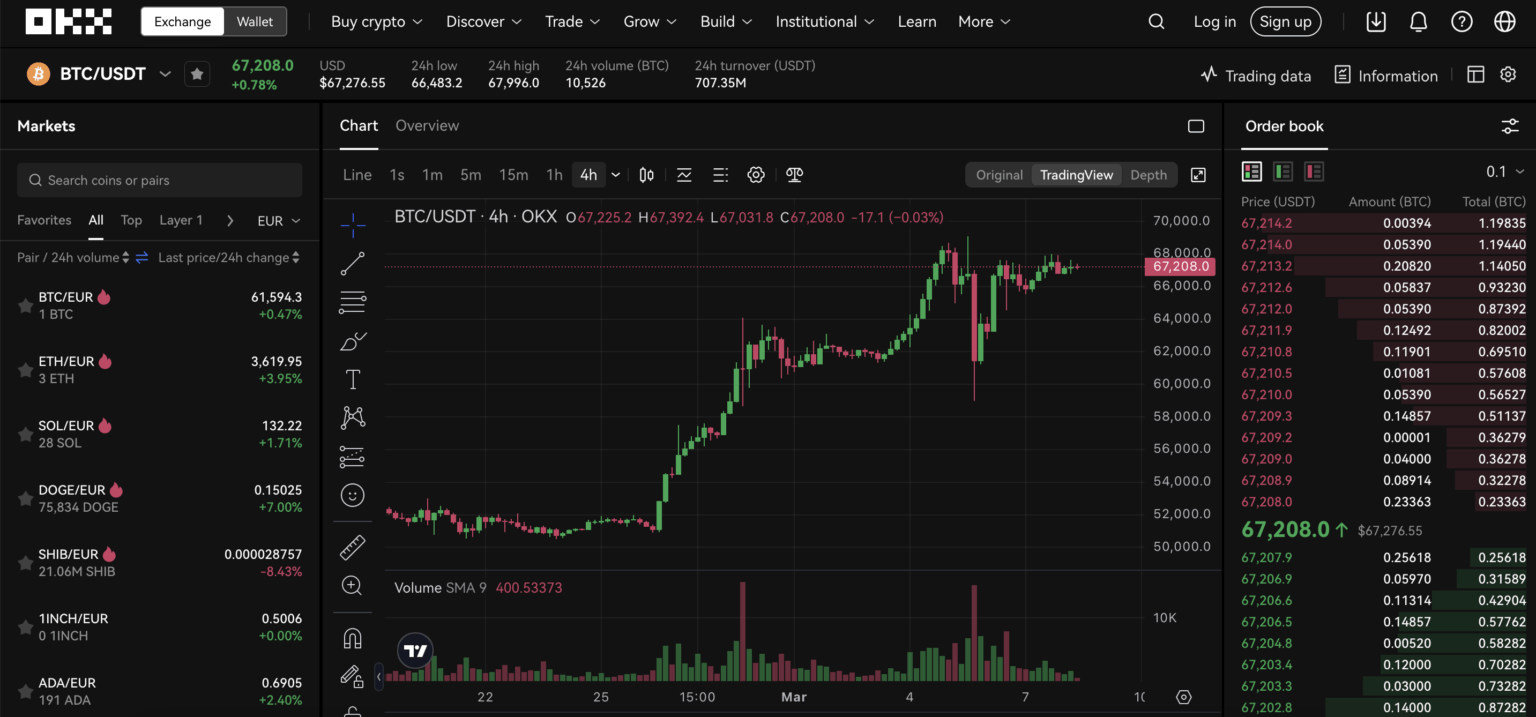
Step-by-step: Signing in and staying signed in
Start with your credentials. Short sentence. Then enable 2FA right away, preferably an authenticator app rather than SMS — it’s more secure and less flaky. Medium sentence: keep recovery keys somewhere safe and separate from the device you use to trade. Longer: if you’ve used a hardware wallet or connected a web3 wallet to OKX, you’ll want to review permissions and revoke any old sessions or dapps that no longer make sense, because lingering permissions can bite you later when an app update or credential leak happens.
Whoa! Quick tip: when you visit OKX, I often open the site in a fresh browser profile that has no extensions that can inject scripts. Really? Yes. My instinct said extensions can be a vector—ad blockers, password managers, weird crypto wallets—so I use a clean profile for big moves. On smaller trades, I might risk it, but that’s personal and maybe dumb. (oh, and by the way…) If you prefer a one-click feel, consider the OKX app for mobile, but remember apps also request many permissions on phones. Trade-offs everywhere.
Account recovery and what usually goes wrong
First, don’t ignore your backup codes. If your phone dies and you didn’t write them down—well, you’ll face the support queue. Medium: verify your recovery email is correct and not an old alias you forgot about. Longer thought: when you try account recovery, you’ll have to prove identity in ways that vary by jurisdiction and sometimes involve submitting documents, selfies, or responding from previously used devices, and delays can be frustrating when markets move fast.
Initially I thought support was quick. Then I had a stupendously long wait during a high-volatility day. On one hand, they have automated flows that handle 80% of cases; though actually the 20% messy cases get human review and that’s where you need patience and documentation. My working method: take screenshots of error messages, note browser/OS, and timestamp actions—yes, sounds nerdy, but it helps in disputes.
Web3 on OKX — bridging custody and self-custody
OKX isn’t just an exchange login; it’s moving toward a web3 hub where you can connect external wallets, manage NFTs, and interact with dapps. Short burst: Whoa! That changes the risk model. Medium explanation: when you connect a wallet, you’re authorizing on-chain approvals that persist until revoked. Longer: so even if your exchange account is solid, a compromised wallet connection can result in token approvals being exploited by malicious contracts, which is why periodic audits of connected dapps are smart practice.
I’ll be honest—I like the convenience of unified access, but this part bugs me: users sometimes conflate custodial balances with on-chain assets. They’re different. I’ve seen people panic when their wallet wasn’t showing funds because they assumed the exchange had custody; frustrating and avoidable. My advice: label accounts, and keep small test transactions when linking things for the first time.
Security checklist — do these before you trade
1) Use a hardware or app-based 2FA; avoid SMS when possible. 2) Whitelist withdrawal addresses if you use frequent transfers. 3) Review active sessions and revoke unknown ones. 4) Set strong, unique passwords and store them in a reputable manager. 5) Monitor email alerts and set up price/withdrawal notifications if OKX offers them.
Something practical: enable device reminders so the exchange prompts you when a new login occurs. My instinct said it’s small but it catches a surprising number of unauthorized attempts. Seriously—most bad actors stop when an account owner responds fast to a login alert.
Common errors and quick fixes
Login stuck on 2FA? Try syncing your authenticator app’s clock. Short. Email not arriving? Check spam and filters, and confirm the address in your profile. Medium: locked account after failed attempts often requires identity verification, so avoid repeated guesses. Longer: browser caching, VPN use, and ad-blockers can interfere with some OKX flows—if something breaks, try incognito mode or another browser to isolate the issue.
My instinctive first move is to breathe and not hammer the keyboard—retries can make things worse. On one hand it’s tempting to brute-force a fix, though actually slow, methodical troubleshooting prevents accidental lockouts or flagging by security systems.
How I integrate OKX into a trading workflow
I keep a split setup: one clean browser profile for deposits/withdrawals and another for market watching and analytics. Short sentence. I connect my hardware wallet only for on-chain activity. Medium: API keys get scoped carefully—read-only for analytics, trade-only for bots, and withdraw disabled unless absolutely needed. Longer: rotating API keys and auditing code or third-party platforms that use those keys is something I schedule monthly, because automation is powerful but leaves you exposed if a key leaks.
I’m biased toward caution here; some pros run huge operations with broader permissions, and that works for them. I’m not 100% sure I’d scale the same way without added operational security, so take that as my limit-of-comfort. Also, small tip: tag your API keys by purpose so you can kill a single process without disrupting everything.
Real-world snafus I’ve seen
One trader linked an old email and couldn’t pass verification during a withdrawal freeze—big stress. Another forgot to revoke an approval for a test dapp and later found tokens drained. Medium: device time mismatch broke 2FA for someone mid-trade; they lost precious minutes. Longer: regulatory or KYC hiccups sometimes require additional documentation that the exchange didn’t make obvious up front, and that led to surprise holds on accounts for people who assumed trading would be frictionless.
Okay, so check this out—document everything, and treat your login like an entry point to a vault. My instinct keeps whispering: prevention beats response.
FAQ: Quick answers for common OKX sign-in questions
Why won’t my 2FA codes work?
Authenticator apps rely on correct device time. Sync your phone’s clock or use the sync option in the app. If you used SMS and aren’t receiving texts, check carrier issues or try a different network. If things still fail, prepare recovery proofs for support.
How do I connect a web3 wallet safely?
Use a hardware wallet for large balances, check the dapp request details before approving, and revoke permissions you no longer use. Test with a small tx first. And yes—label and separate your custodial exchange account from self-custody wallets.
What if I forget my OKX password?
Use the account recovery flow and have your KYC documents ready if prompted. For faster help, include timestamps and screenshots when contacting support. And remember: keep backup codes offline for emergencies.
Where can I find the OKX login page?
For direct access and a straightforward walkthrough of the login flow, try this resource: okx. It helped me orient new users without sending them down sketchy links.
Alright—closing thought: logging in is mundane until it isn’t. My emotional arc started skeptical, moved to pragmatic, then to cautious optimism. I’m still curious about how OKX will balance web3 integrations and custodial convenience. There’s more to learn, and honestly, that excites me as much as it bugs me. Somethin’ to keep watching.